
TE TAUNGA RERERANGI O WHAKATŪ | NELSON AIRPORT
Aorere Ararau
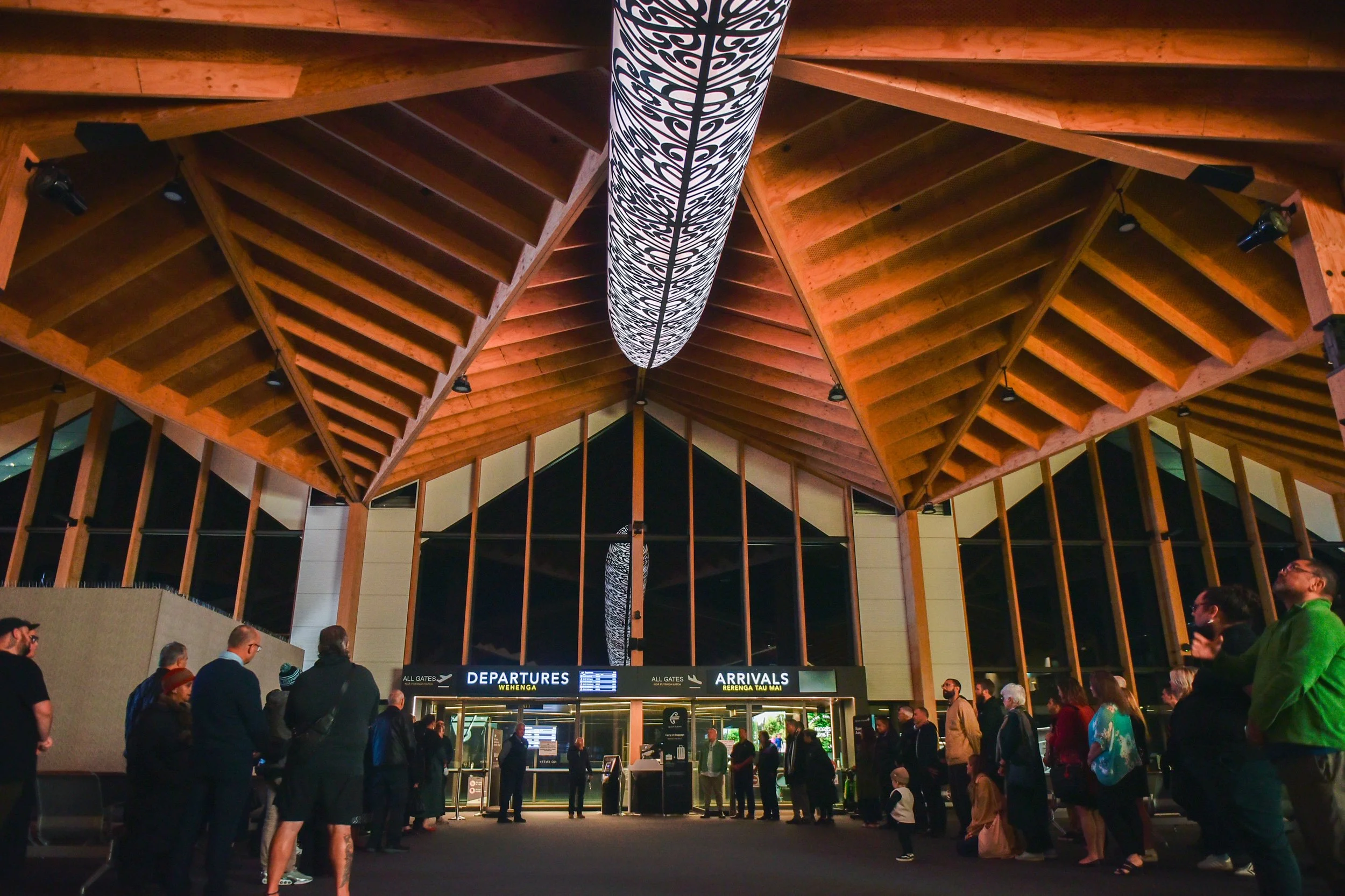
A waka suspended between arrivals and departures.
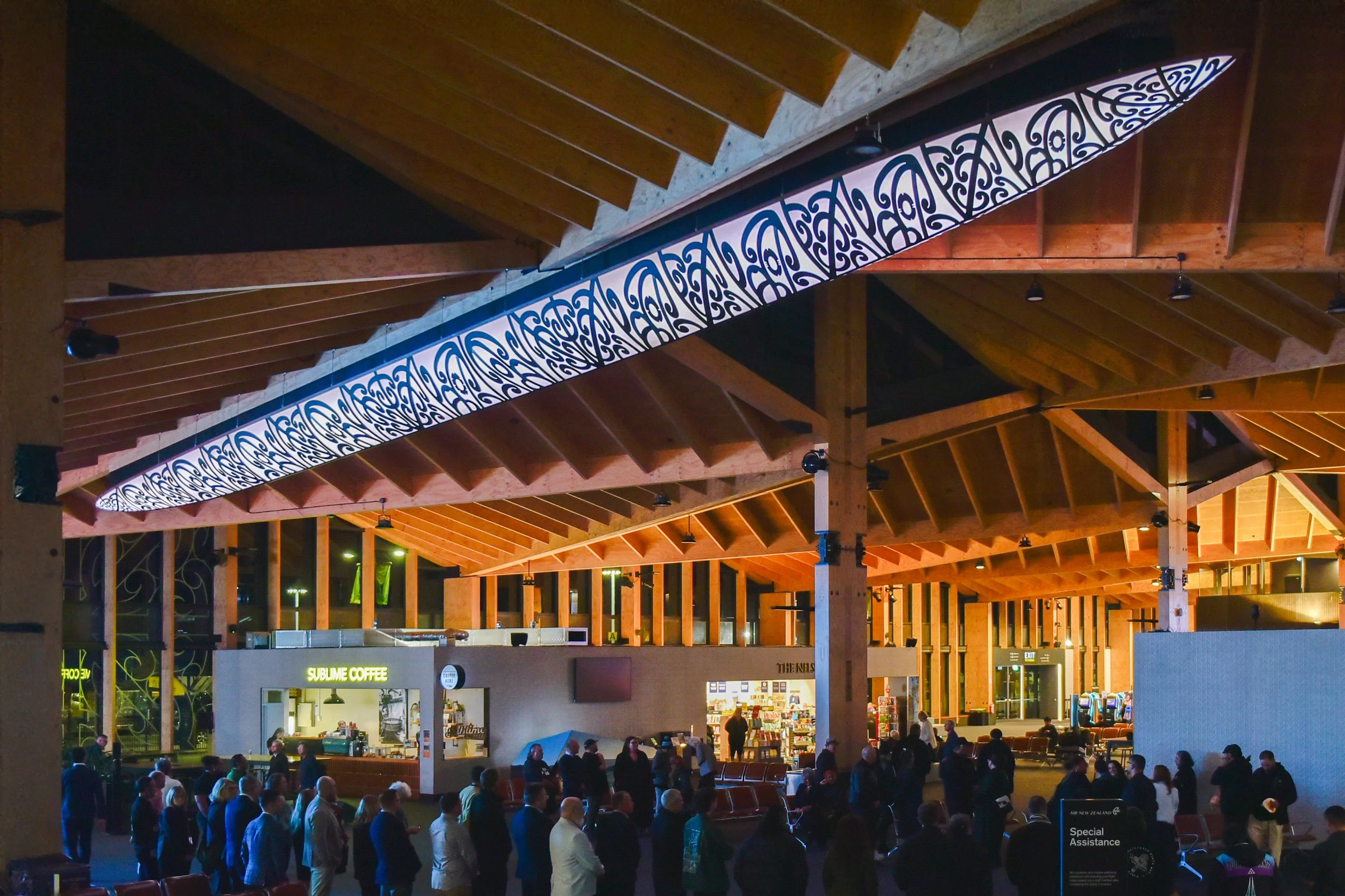
A story that has always been here.
A threshold between worlds.


Nelson Airport carries the responsibility of introduction. It is where arrival and departure are continually enacted — where people first meet Te Tauihu, and where they leave it behind.
Aorere Ararau responds directly to that responsibility.
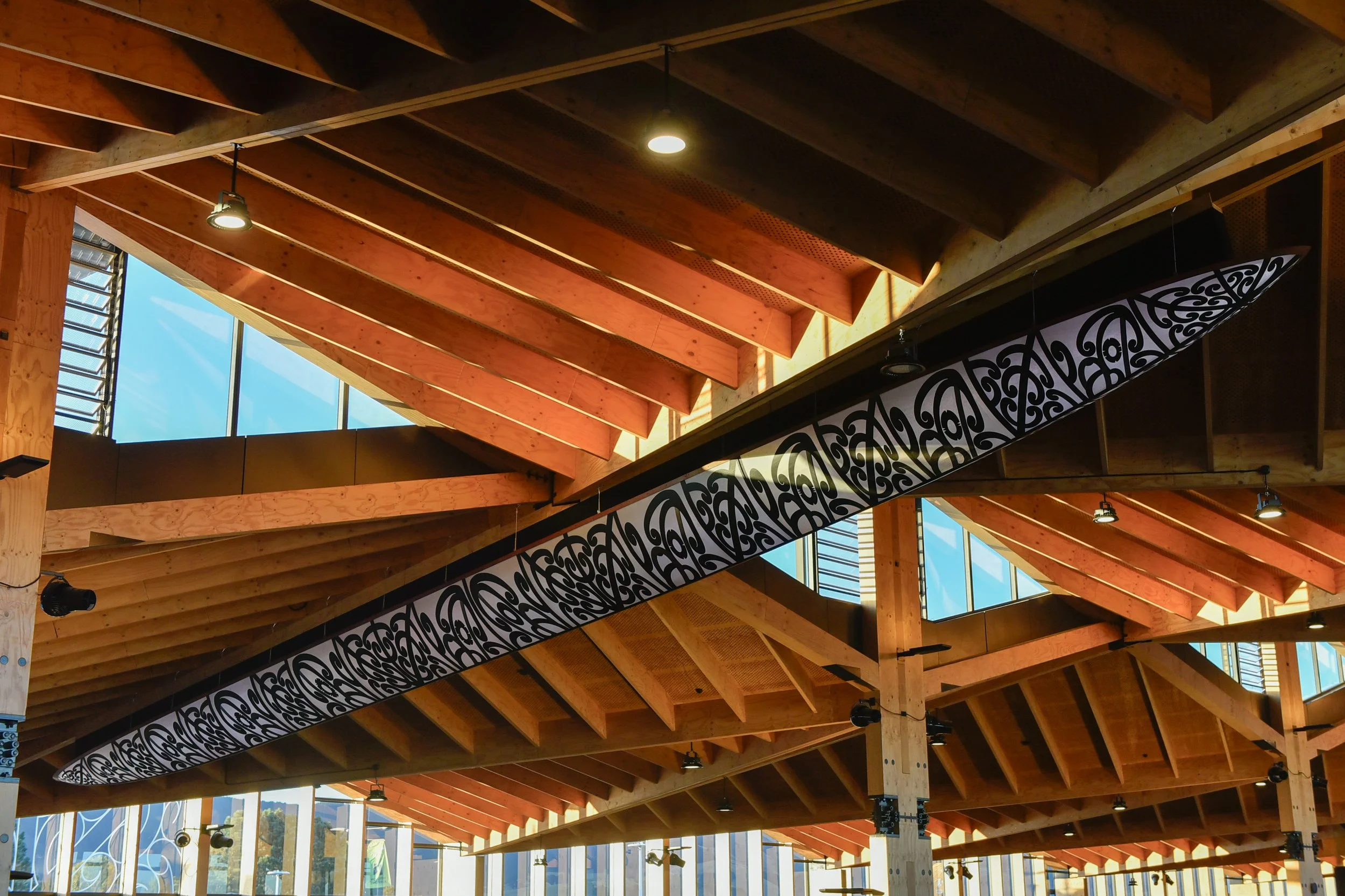
Suspended along the tāhuhu of the terminal, the waka locates all who pass beneath it within the stories and identity of this place. It functions as a tomokanga — a gateway or threshold — shaping how Te Tauihu is encountered, understood, and remembered.
This work is part of a wider commitment to cultural expression and storytelling at the airport, delivered through Kōpū in partnership with Ngā Iwi e Waru o Te Tauihu.
Kaupapa — Purpose and Partnership
This kaupapa has been years in the making.
Developed through a genuine partnership between Ngā Iwi e Waru o Te Tauihu and Nelson Airport, this initiative reflects a shared commitment to strengthening the visibility and presence of toi Māori within one of the region’s most prominent civic spaces.
It represents a shift from symbolic inclusion toward meaningful presence — an expression of identity, partnership, and belonging held at the scale of the region’s primary gateway.

Aorere Ararau — The Name
The name Aorere Ararau was gifted to the work by Rōpata Taylor. It brings together a set of ideas that sit naturally within both this landscape and the function of an airport.
Aorere anchors the work in place - carrying the resonance of Te Tai o Aorere and the naming traditions of our ancestors, where names travelled and settled across landscapes as people did.
Held to the light, the name opens further:
Ao - cloud, sky, horizon
Rere - to flow, to move, to fly
Ararau – the many pathways that converge here, moving in many directions.
Together, Aorere Ararau offers a grounding in place, a narrative of movement, and a clear connection between our waka traditions and the contemporary role of the airport.
Tomokanga — The Gateway
As one of the most prominent gateways to the region, Nelson Airport marks a point of transition — between arrival and departure, between here and elsewhere.
Aorere Ararau performs the role of a tomokanga at civic scale.
A tomokanga is not simply an entrance. It is a spatial threshold that orients those who cross it — a movement between states, between spaces, between ways of being.
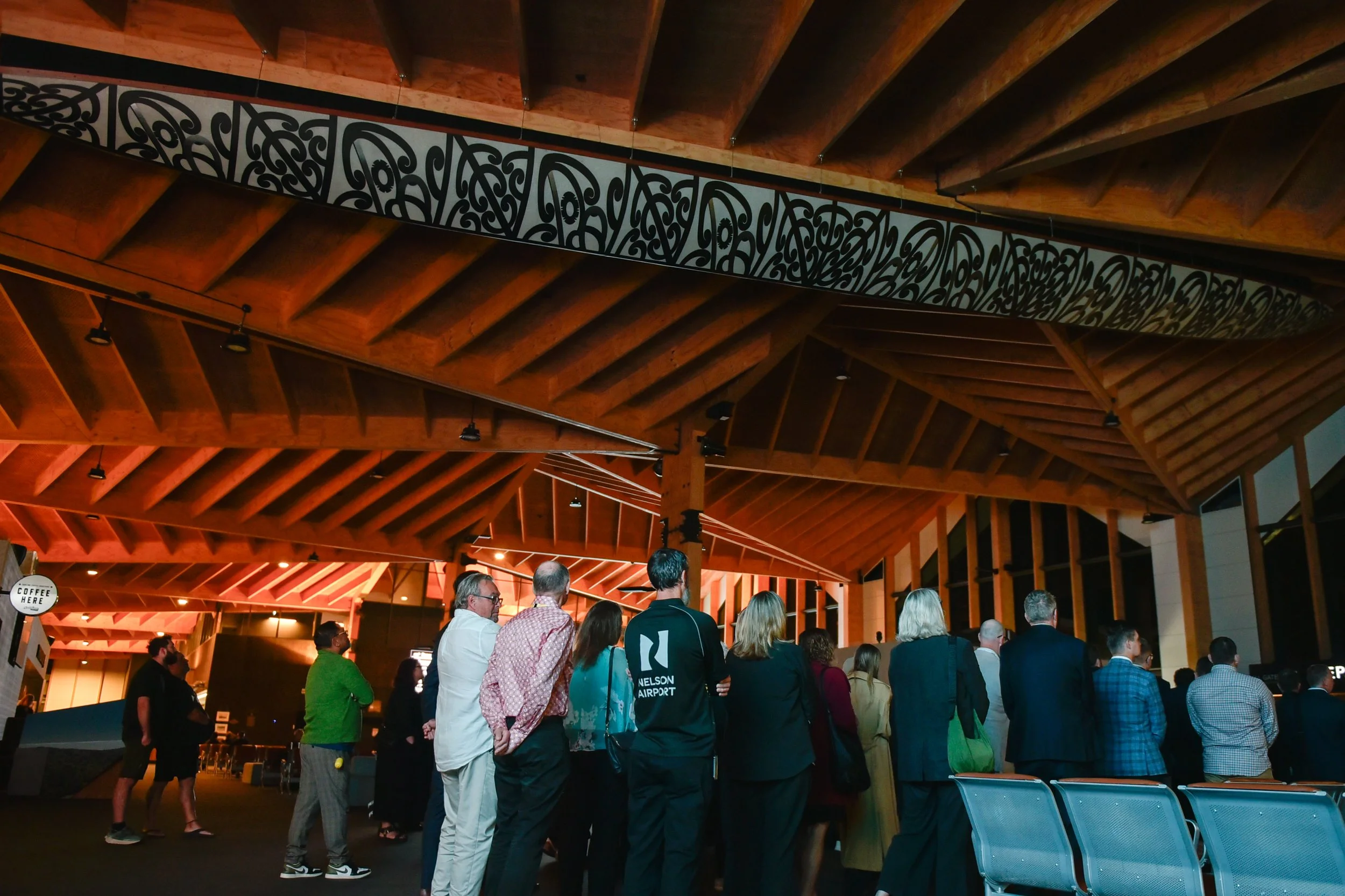
Every person who passes beneath the waka moves through that threshold. They are welcomed into Te Tauihu with context, and they depart reminded of it.
In this way, the waka establishes the protocol of the place — quietly but unmistakably.
Stories of Movement & Migration
Te Tauihu takes its name from the prow of the waka of Māui. The identity of this place announces itself through that origin.
Waka are genealogical carriers, binding people, land, and story across distance and time.
In Te Tauihu, iwi trace their origins to three main ancestral waka - Kurahaupō, Tokomaru, and Tainui - whose presence is held within the structure of Aorere Ararau.
The waka also locates contemporary travel within a much longer continuum. The journeys of our tūpuna across Te Moana Nui a Kiwa were extraordinary acts - reading currents, stars, clouds, and winds to navigate here. Those same elements continue to shape movement today.
How we travel has changed. The instinct to move, return, connect and belong has not.
As travellers pass beneath the waka, they move through a space suspended between Papatūānuku and Ranginui, where arrival and departure are held together as a unified gesture.
Form & Intention
The waka is deliberately positioned along the tāhuhu of the terminal — the ridge line of the building. It is not applied to the architecture. It is integrated within it.
The terminal itself references the surrounding landscape through its folded roof form and openness to Te Tai o Aorere. Aorere Ararau extends and completes that expression, grounding the building within the identity and narratives of this place.
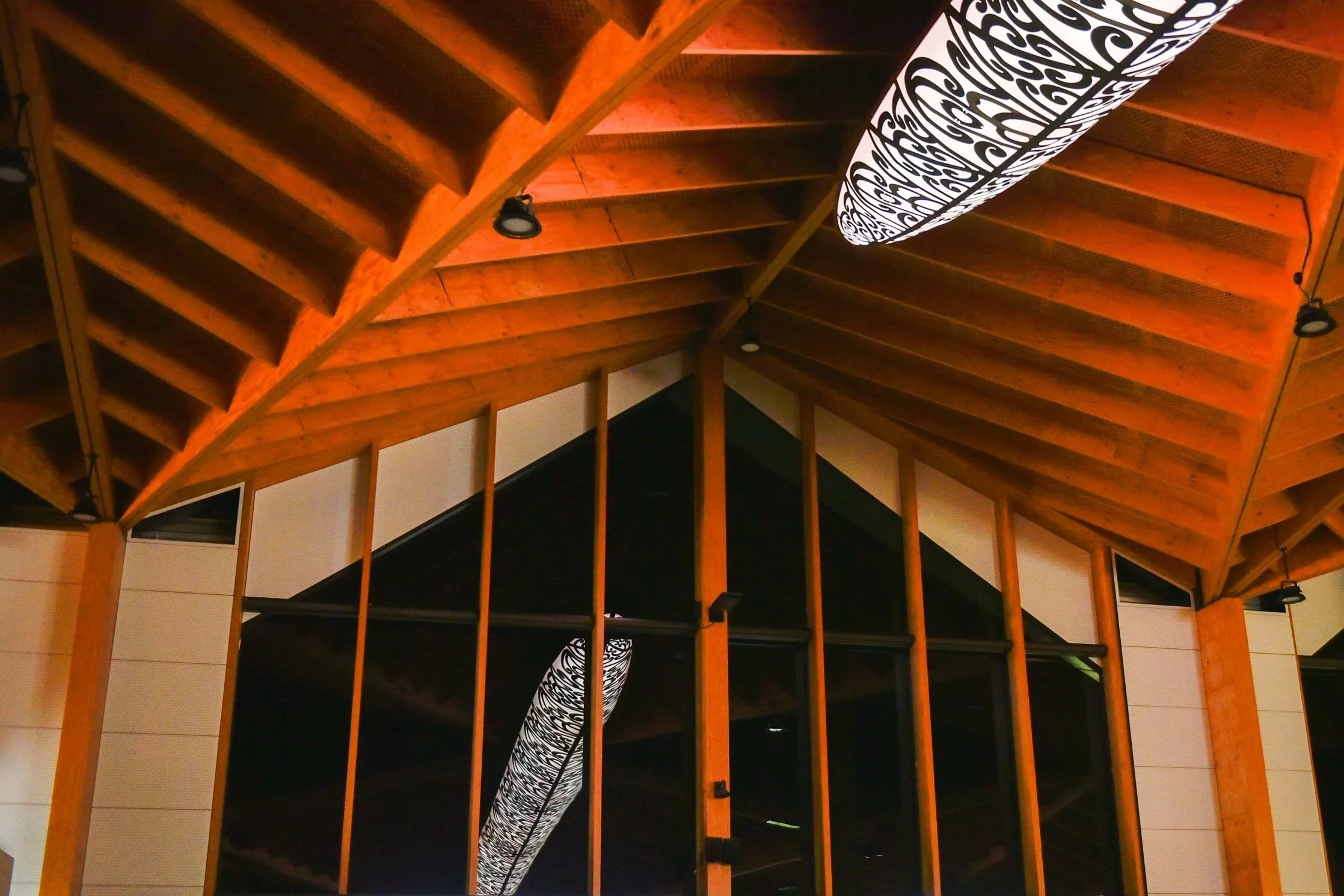
The form is rooted in the whenua and lifts toward the runway and horizon. Its upward movement recalls the kuaka - the migratory bird that travels vast distances and returns again.
Ancient waka journeys and contemporary flight are held together within that gesture.
Visual Language
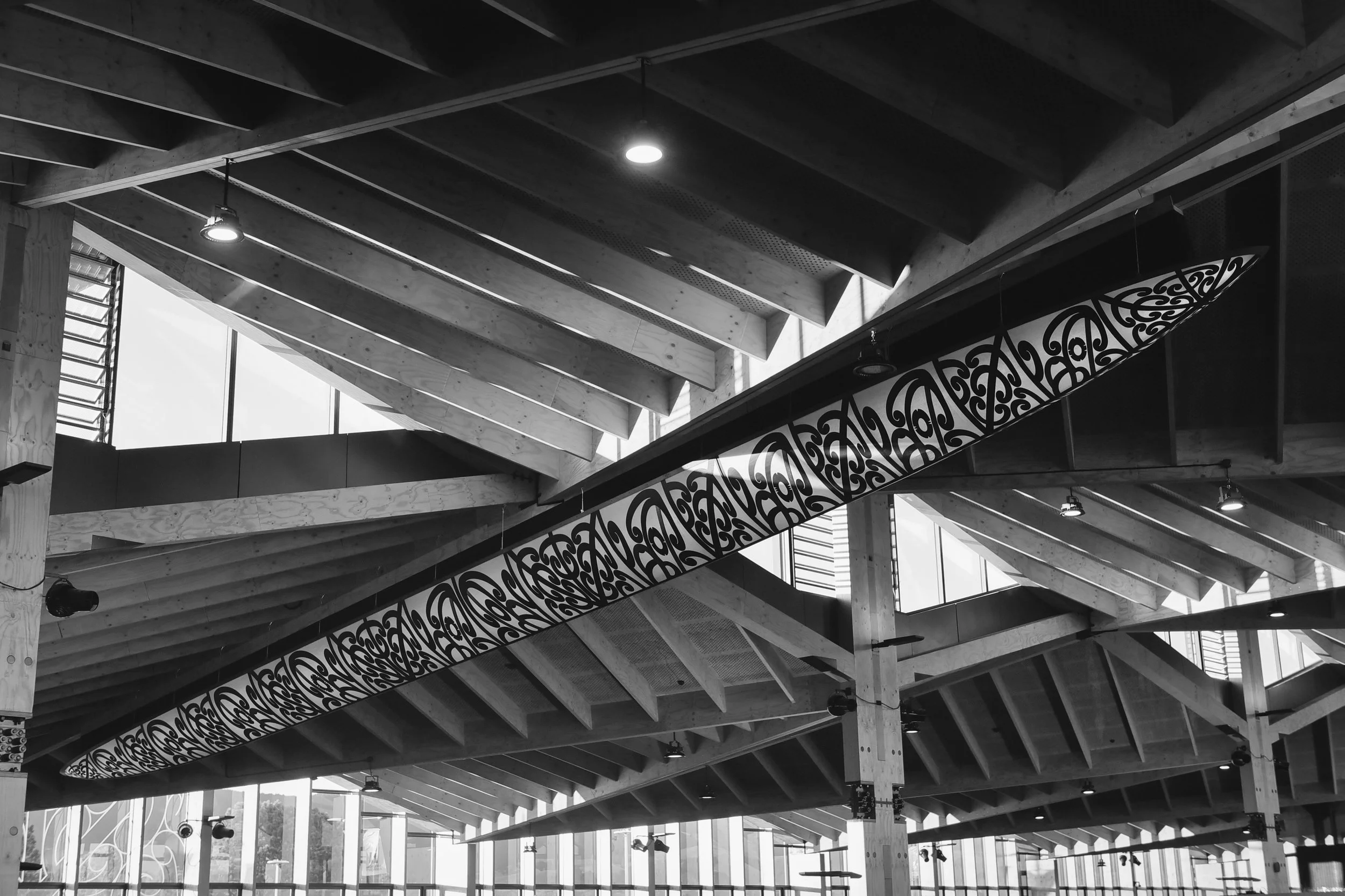
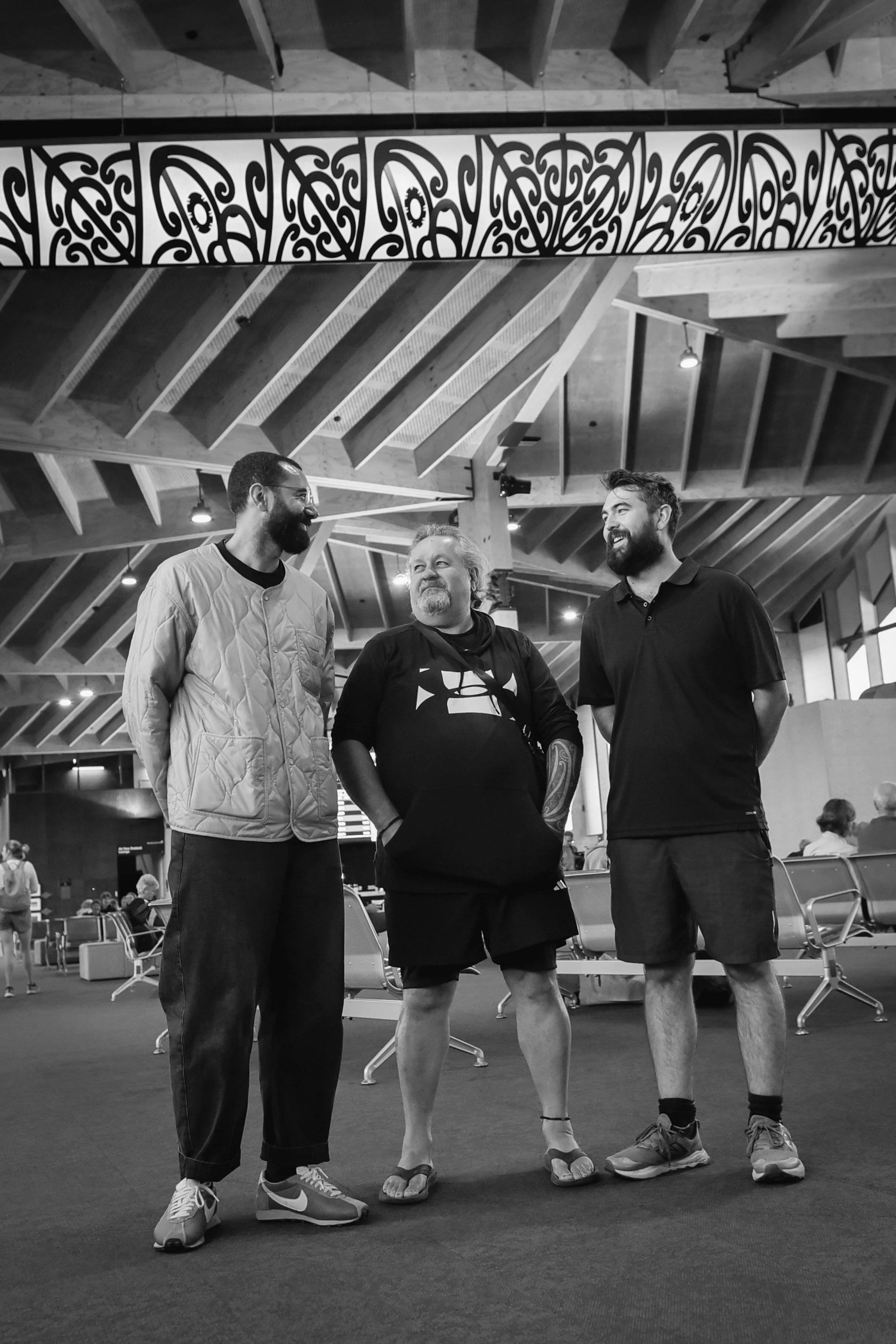
Kōwhaiwhai patterning runs along the hull of the waka and extends onto the glass façade of the terminal. Designed by Fayne Robinson, these patterns carry the people of this place.
Eight whekū represent the iwi tangata whenua iwi of Te Tauihu. At the centre, a paired motif acknowledges manuhiri and tauiwi - those who visit here and those who have made this place home - affirming a shared identity shaped through relationship and love for this place.
As light moves across the building, the kōwhaiwhai is cast as shadow into the interior, allowing the work to extend beyond the waka itself and into the lived experience of the space.
Collective Effort
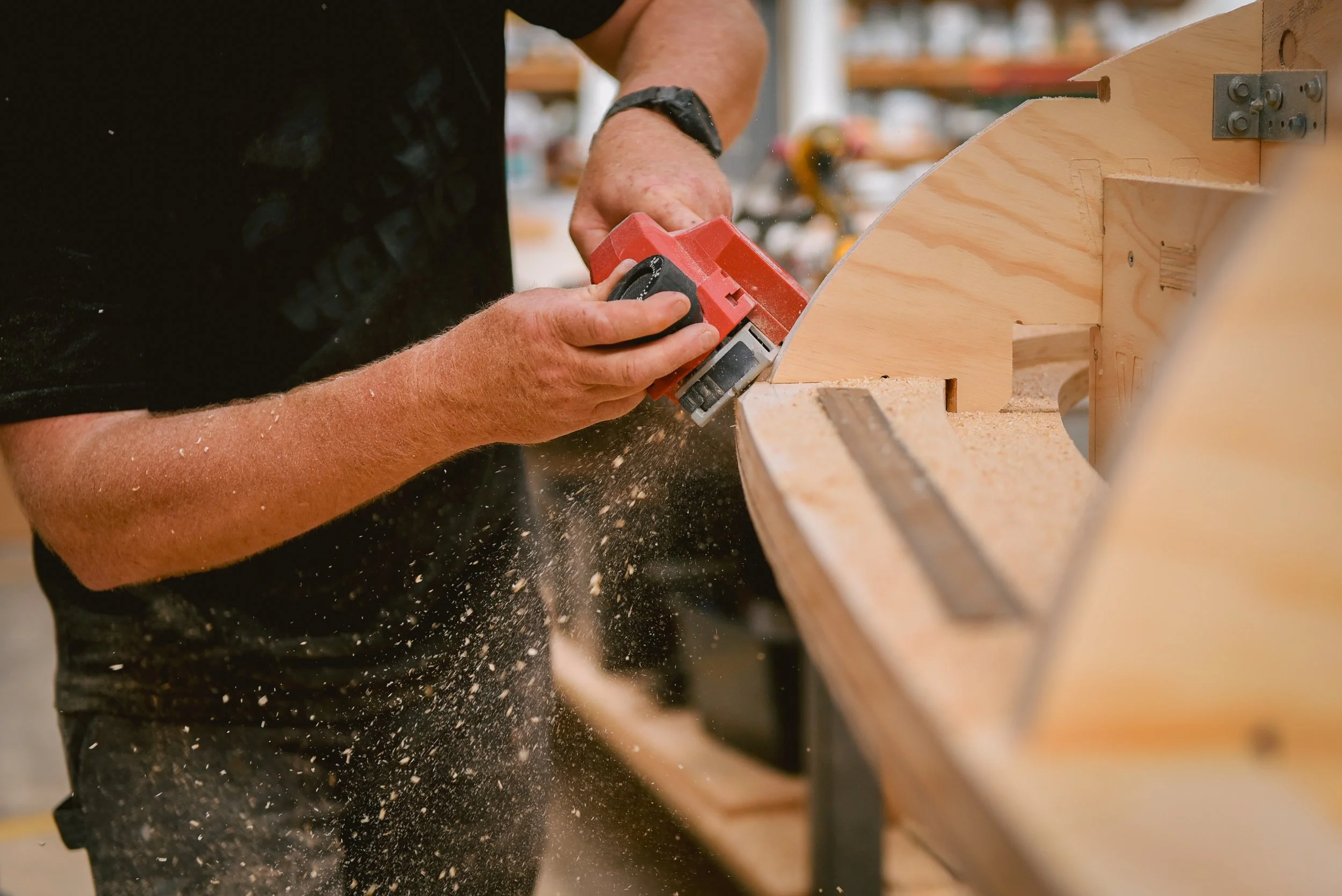
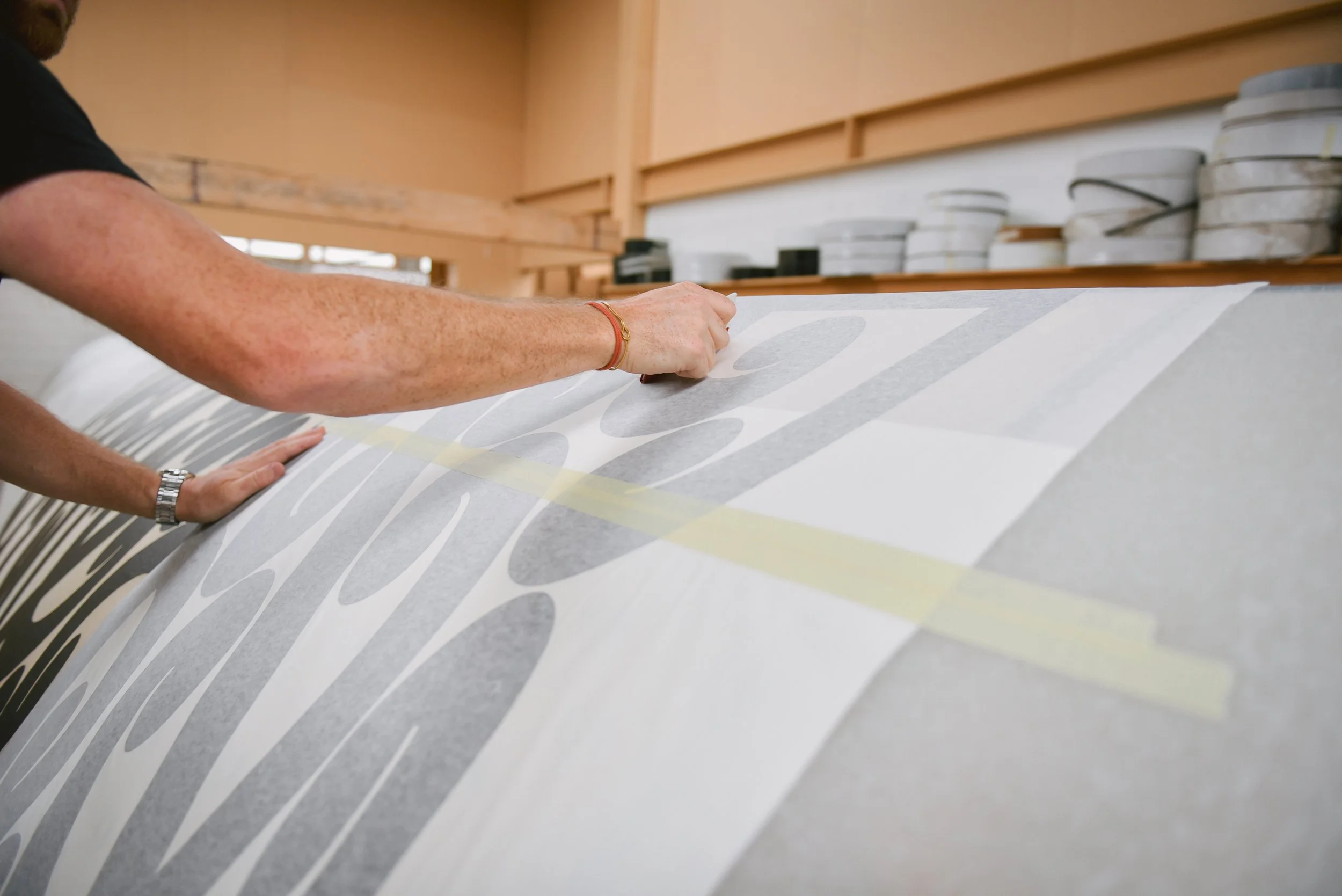
Aorere Ararau spans 22 metres, weighs over 1.3 tonnes, and required more than 1,000 hours to manufacture and install. Nothing within the work was developed in isolation.
Its creation reflects a sustained process of collaboration between iwi, kaumātua, artists, cultural practitioners, designers, engineers, fabricators, and airport partners.
Its strength and integrity come from that collective effort — a shared commitment to producing something of lasting significance for the region.
By asserting cultural presence within this civic gateway, Aorere Ararau establishes a clear expression of mana whenua in one of the region’s most visible spaces.
It offers visitors a deeper understanding of where they are, and for those who belong here, a sense of recognition — of culture, identity, and story held with confidence.
Seen as a whole, Aorere Ararau weaves together the people and places of Te Tauihu. It speaks to arrival and departure, movement and origin, past and present, above and below.
It holds the memory of the epic migrations of our tūpuna alongside those of today, and locates us all within a single, continuous story.